

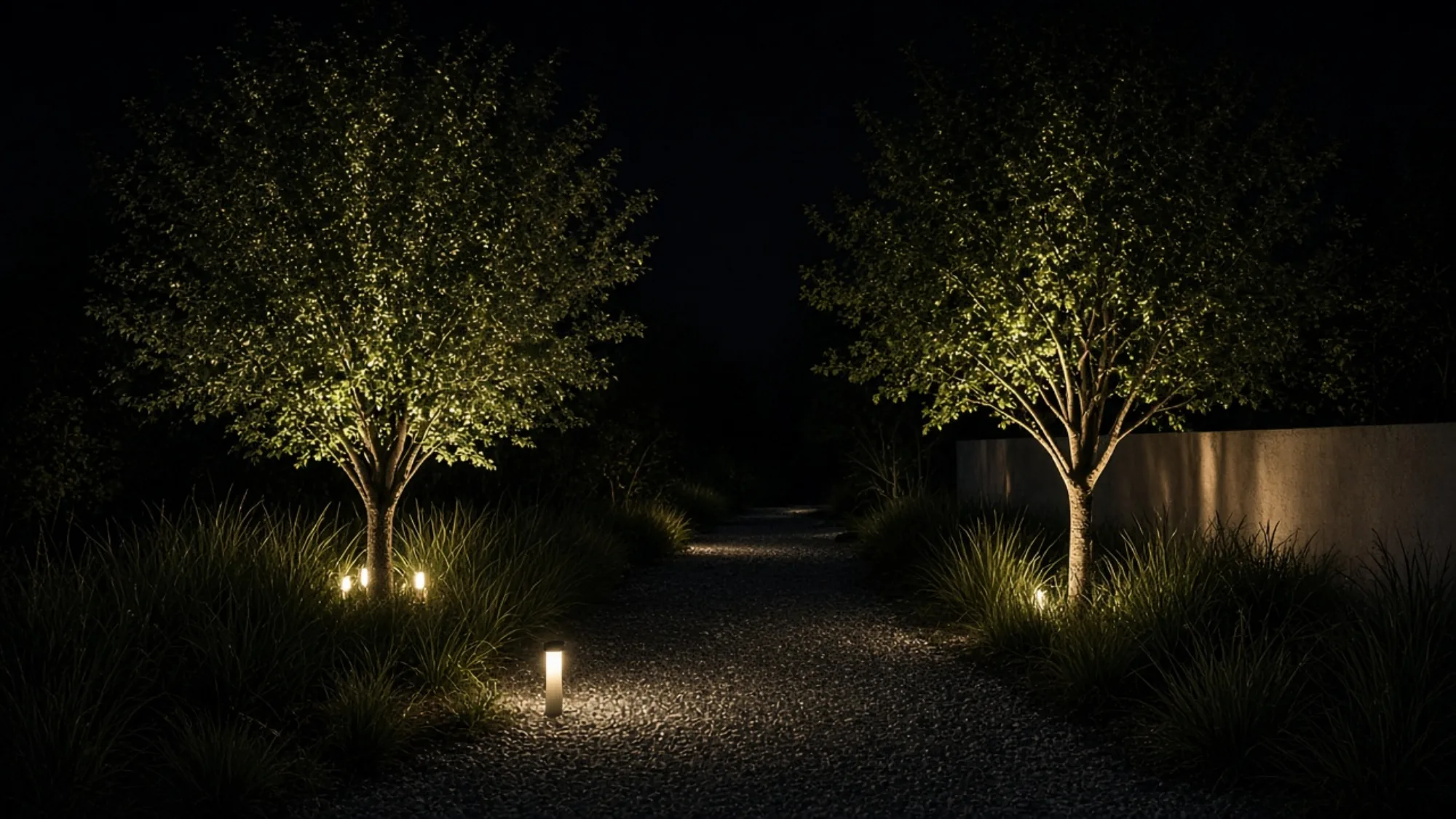
Landscape lighting in Dubai
Paths, trees, facades, and the pool edge lit for the evening, when the garden is actually used. Low-voltage LED specified for heat and dust, aimed after dark, not only on a drawing.
What landscape lighting covers
A lighting design for the garden and the outside of the house: the route from the gate to the door, the steps and level changes, the trees that give the garden its shape, the facade, the terrace and dining table, and the edge of the pool. Fixtures specified for heat, dust, and water; wiring and control installed with the hardscape; every fitting aimed after dark.
What it is not Landscape lighting is not five ideas installed by five trades. When the pool contractor, the pergola supplier, and the electrician each add their own lights, the garden at night is a mess of colour temperatures and glare. One design, one control, one hand.
Who this page is written for
Villa owners who use the garden in the evening for half the year and want it to be a room after dark, lit with restraint.
For the pool it lights, see pools and outdoor living. For the shade structure it sits in, see pergolas and decking. For the garden as a whole, see landscape design.
What the lighting scope can include
- Lighting design by area: arrival, circulation, trees, facade, terrace, water
- Low-voltage LED fixtures specified for heat, dust, and water
- IP ratings matched to position, with wet-area fittings at the pool
- Transformers, wiring, and ducts installed with the hardscape
- Control by zone and scene, with timers or a smart system
- One colour temperature across the garden
- Aiming session after dark before handover
- Solar only for minor path markers, and only where it is honest
Heat, dust, water, and the winter sun
Fixtures in a Dubai garden sit in heat that shortens the life of poor electronics, in dust that finds every seal, and near water that finds every weak gland. Bridgemark specifies low-voltage LED fittings rated for that position, with wet-area fittings at the pool and in-ground fittings that drain. Wiring runs in ducts laid under the hardscape so the garden is never cut open later, and transformers sit where they are ventilated and reached.
Wired light is used for anything that matters: steps, the route to the door, the trees, the facade, and the water. Solar fittings are reserved for minor path markers in unshaded spots, because their output falls in winter and in dust, and a step lit by a fading solar light is a step in the dark. Every fitting is aimed after dark with the client present, because a drawing cannot see glare.
- IP ratings matched to position; wet-area fittings at the pool
- Ducts under hardscape; transformers ventilated and accessible
- Wired light for anything that matters; solar only for minor markers
- Aiming after dark, not only on a drawing
The lighting sequence
-
Survey
The garden by day and after dark, the routes, the trees, the water, and the existing supply.
-
Scope
Areas to light, control, and what is wired now or ducted for later. A figure follows.
-
Design and specification
Fixture schedule, positions, circuits, control, and colour temperature signed before orders.
-
Approvals
Not usually required; supply capacity confirmed.
-
Execution
Ducts and wiring with the hardscape, transformers, fixtures, control, commissioning.
-
Handover
Aiming after dark with the client, scenes set, control demonstrated.
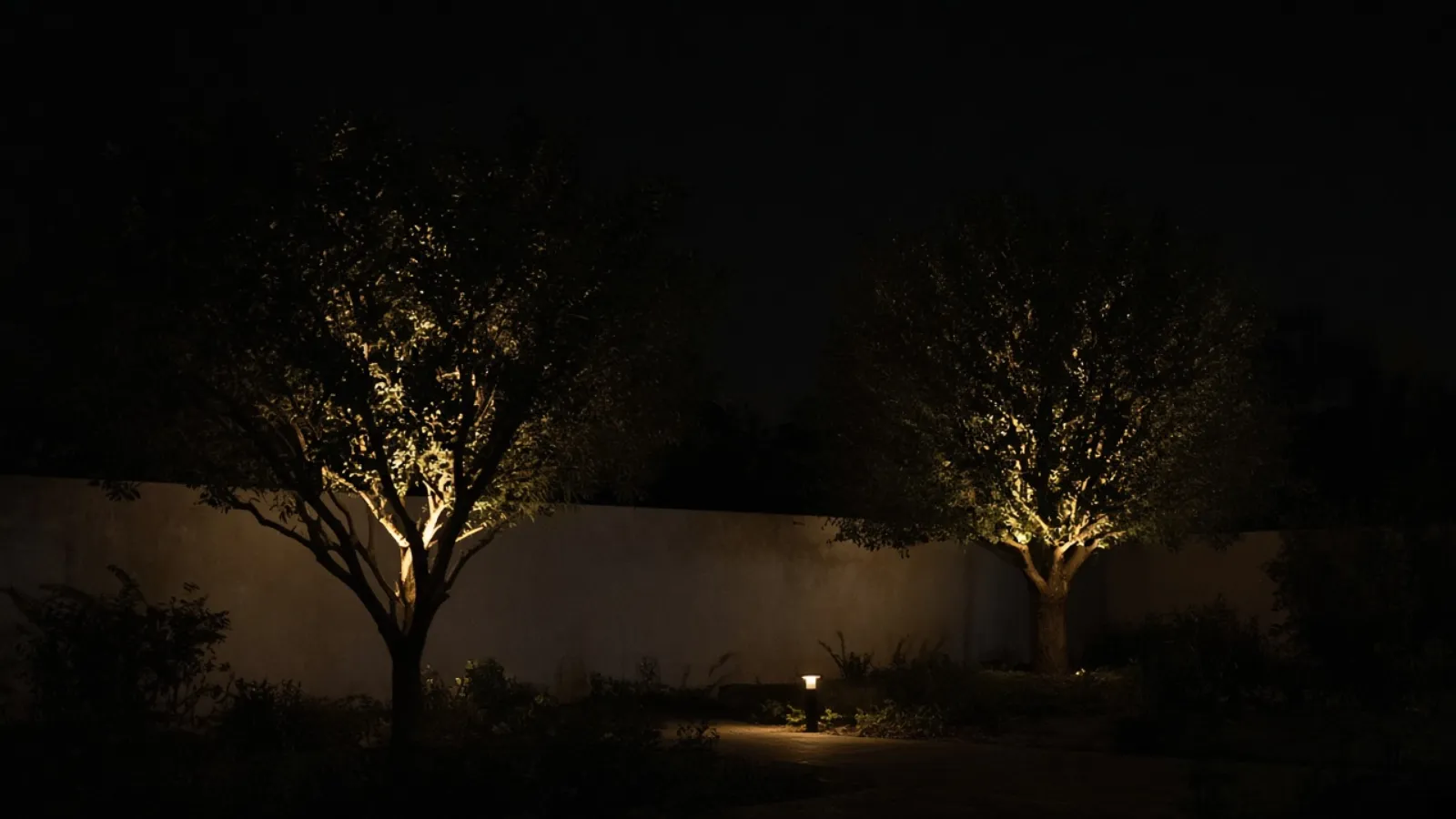
A few aimed lights, not a light show
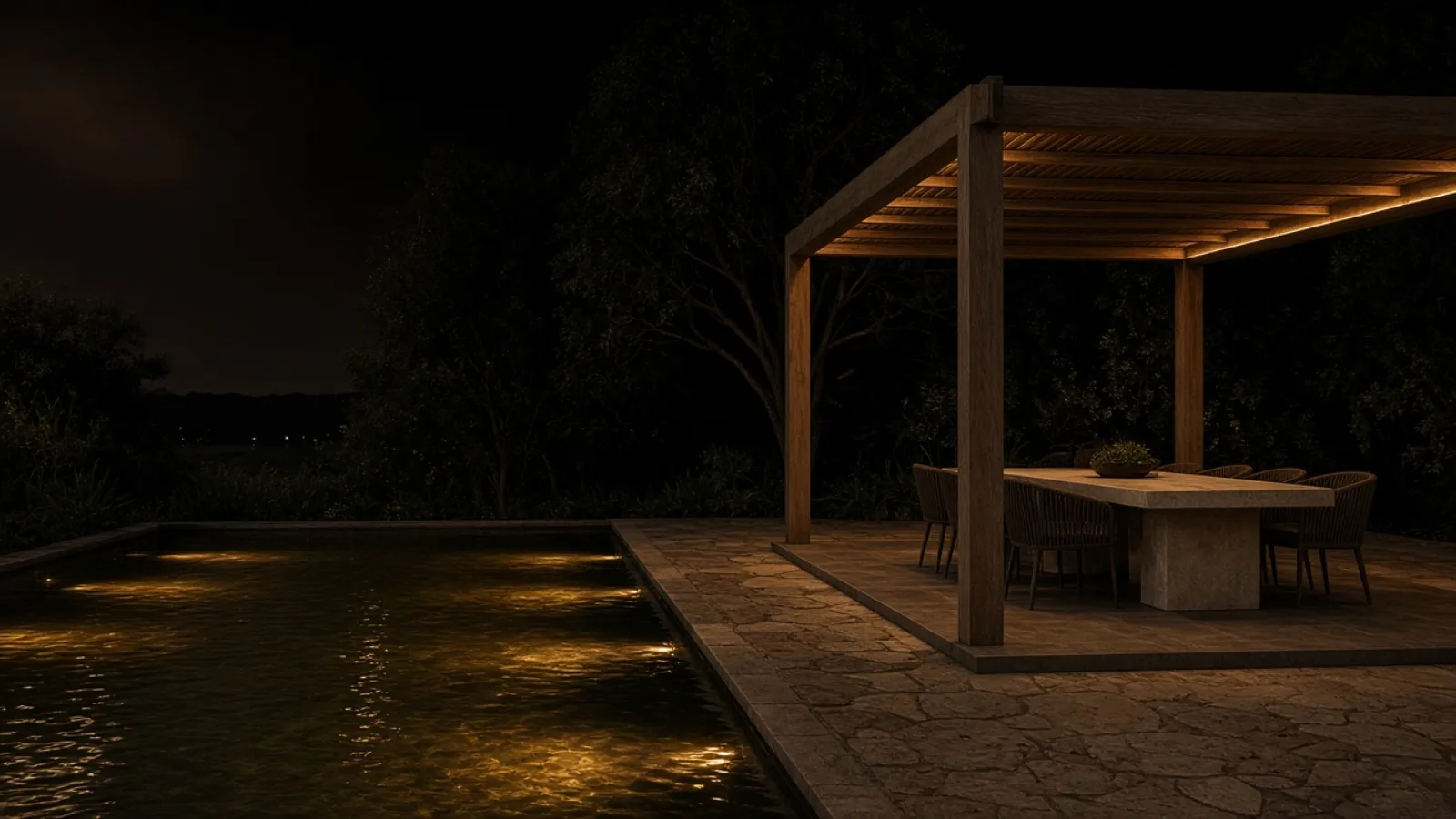
The pool and the pergola in the same design
Typical programme
Lighting installed with a new garden follows the hardscape and is typically measured in weeks, with the fixture lead time on the critical path. Adding lighting to an existing garden depends on how much has to be opened for ducts. A date is written into the contract after the scope is agreed.
What decides the cost
The number of fittings and the wiring beneath them drive the figure; control comes after.
- Number of fixtures and areas lit
- Fixture specification and IP rating
- Length of wiring and whether ducts exist
- Transformers and supply upgrades
- Control system and number of scenes
- Pool and wet-area fittings
A figure is prepared after the survey. Book a Free Site Survey.
Pages that sit beside this one
Landscaping
Full outdoor design and build: masterplan, hardscape, planting and irrigation, artificial grass where it belongs, and lighting.
All of landscapingLandscape design
The masterplan: arrival, circulation, shade, dining, water, planting, and light drawn as one garden before anything is built.
Read about landscape designSoftscape & irrigation
Planting and irrigation: soil replaced where saline, lines zoned and automated, beds and screens planted for heat and privacy.
Read about softscape & irrigationWhat owners ask before they start
Warm white or cool white?
Warm, and one temperature across the whole garden. Mixed temperatures are what make a garden at night look assembled rather than designed. The pool is the one place a slightly different quality of light can be considered, and it is decided in the design.
Are solar lights a good idea?
For minor path markers in unshaded positions, they can be. For steps, the route to the door, trees, the facade, or water, no: their output falls in winter and in dust, and a step lit by a fading light is a step in the dark. We wire what matters.
Can lighting be added to an existing garden?
Yes. The survey looks at what can be reached without opening the hardscape and where ducts will be needed. Where a garden is being rebuilt, ducts are laid under the paving so lighting can be added later without cutting.
Can it be controlled from a phone?
Yes, and by timer and by scene. Control is designed with the fixtures so the whole garden responds as one, rather than as several switches added by several trades.
Will you light the pool as well?
The pool edge, the water, and the terrace around it are part of the same design, with wet-area fittings rated for the position. If the pool is being built or renewed, its underwater lighting is coordinated with the garden lighting.
Book a free site survey
Tell us about the property and the work. We visit, look at it with you, and agree the scope before any figure is given.